



The structure of flowers (3D sectional structure diagram)

Stella's large manatee skeleton
The Stella manatee is a member of the pangolin family in the order Manatees. Its body is huge, with a length of 600-1000 centimeters and a weight of 5000-6400 kilograms; The head is small, the front end is flat, the kiss is extended forward, the mouth is opened downwards, densely covered with mustaches, and there are no teeth; The eyes and ears are very small, without ear shells; The body is brownish gray, the skin is thick, hard, and solid, with many wrinkles; The sparse fur on the back often attracts shellfish parasites, which often attract seabirds to help clean these shellfish; The forelimbs are very short, resembling eels, with horseshoe shaped toe hooves remaining at the ends. It is distributed along the North Pacific coast.

Whale headed Stork Specimen
Whale headed stork, a species of the genus Whale headed stork in the family Whale headed stork of the order Storksiformes. Whale headed cranes, also known as "whale faced storks," "boot billed storks," or "father of shoes," are the largest surviving bird species in terms of head. The adult feathers of the Whale headed Stork are mainly gray, of the same color as males and females, with a green luster on the back. The feathers of the young birds are mainly brown, with no green luster on the back. The tail is short and there is a short crest behind the head. The mouth color is mostly yellow green, rainbow white to light yellow, and the feet are black. The most prominent feature of its appearance is its large head and thick, wooden boot like mouth, named after its powerful beak.

Hacker Bird (Restoring 3D Model)
Phorusrhacidae is a large carnivorous bird species. The closest relative to them today is the crane family. The terror bird, also known as the terror bird, is a bird like carnivorous animal that lived alone during the same period as the saber toothed tiger. It is about 1-3 meters tall. Terror birds have hard leg bones and strong muscles, which can completely crush the bones of medium-sized prey and slowly feed on the nutrient rich bone marrow in the prey's bones. According to scientists' estimates, terror birds can reach speeds of up to 97 kilometers per hour, and the extinction of terror birds is believed to be related to wolf packs and disasters.

Cross section of eukaryotic cells (microscopic 3D model)

㺢㹢狓 specimen
㺢㹢狓 (hu ò ji ā p ī) (Latin name: Okapia johnstoni, English name: Okapi), also known as the African unicorn, is a chordate animal of the genus Hoga in the family of deer. It is listed as an endangered species on the IUCN Red List and is one of the few mammals that can lick its own ears.

Fossil of jawbone under horse

Dodo Bird (3D Restoration Model)
The dodo bird (Raphus cuculatus) is an extinct bird species in the pigeon family of the pigeon order. The body shape is comparable to that of a swan, and there are also obvious sexual dimorphism. Body length 70-90 centimeters, weight 17-28 kilograms. It is a large bird with a plump body, covered with soft gray feathers, which are brown or gray in color. The female bird has lighter fur than the male bird. There is a white feather on the tail. Their wings are too small and weak to lift the Dodo off the ground. Because they cannot fly, the female bird lays one egg at a time, which is co hatched by the female and male birds. Eating fruits and seeds.

White sturgeon
The Chinese sturgeon is a fish species belonging to the family Acipenseridae in the order Sturgeon, also known as the Chinese sturgeon, Chinese sturgeon, swordfish, elephant fish, tuna, etc. Body length spindle shaped, pectoral fins flat in the front and slightly laterally flattened in the back; The head is relatively long, accounting for more than half of the body length; The kiss is elongated in a conical shape, with a flat and narrow front end; Extremely small eyes, round, lateral position; Lower mouth, with a large, curved mouth and sharp small teeth on both jaws; It should be closer to the eyes than to the snout; The gill pores are large and connected to the isthmus; Gill rakes are thick and tightly arranged; The dorsal fin is located behind the body, close to the base of the caudal fin; The anal fin is located below the dorsal fin; Developed pectoral fins; There are no scales on the body surface. The back and tail fins are dark gray or light gray, while the fins and abdomen are white.

Hippopotamus Skull (with 3D animation)

Snail (3D schematic diagram of internal structure)

Terror bird skeleton
The terror bird is a bird of the ostrich order, terror bird family. The abdominal feathers are yellow, and the other parts are yellow and black in color. Enlarged body, degeneration of upper limbs, and short and thick lower limbs; The neck is covered with feathers and is relatively short; There are three toes. In 1843, it was named the terror bird by Owen, meaning a large bird that can scare people. The terror bird inhabits the primitive lowlands and coastal forest grasslands of the southern islands of New Zealand. Living as a couple, each pair has their own territory. Cannot fly and run slower than ostriches. They feed on berries, grass seeds, and roots, as well as some insects. Only one egg is laid per reproduction, no nest is built, and the egg is laid in a concave area on the ground. The egg is about 250 millimeters long and 180 millimeters wide.

Chromosome Structure (Microscopic 3D Schematic)

Internal structure of bacteria (microscopic 3D schematic diagram)
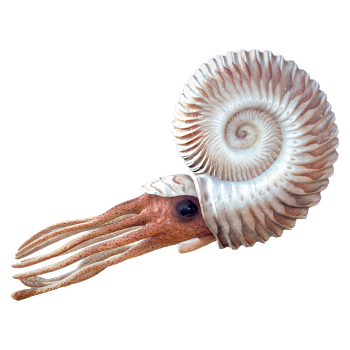
Ancient Kikushi (3D Restoration Animation)
Kikushi, a collective term for cephalopods and ammonites in the phylum Mollusca, is a group of extinct marine organisms. Kikushi lived from the early Devonian to the late Cretaceous period, and its shell is often preserved in the form of fossils in the strata. The outer shell of ammonite is a single petal, consisting of three parts: the fetal shell, the gas shell, and the living room. It usually spirals around the fetal shell along a plane, with each revolution forming a spiral ring. Adult ammonite shells generally have 5 to 9 spiral rings, symmetrical on both sides, and can be straight, curved, or even irregular.
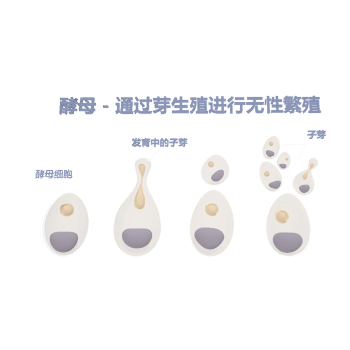
Yeast Asexual Reproduction (Microscopic 3D Schematic)

Rabbit skeleton

Popular Models
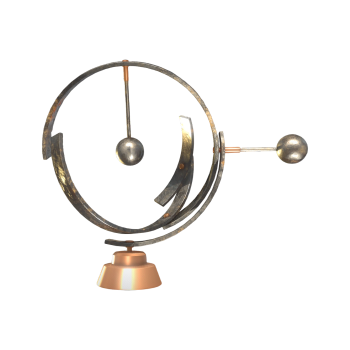

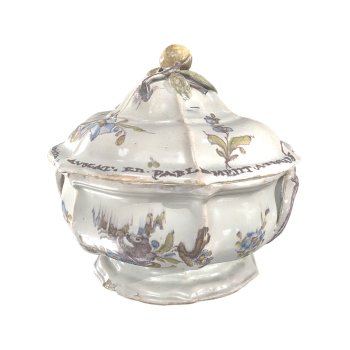
Random Model


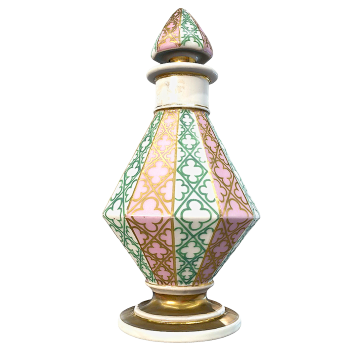


Soviet MiG-23UB trainer
682 View

Natural rock (creek stone)
470 View
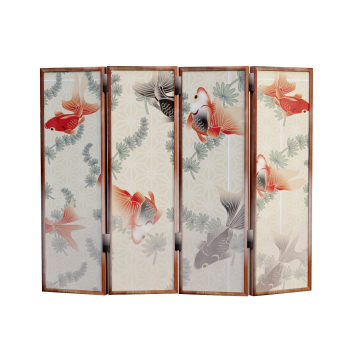
Japanese Screen - Goldfish
1152 View


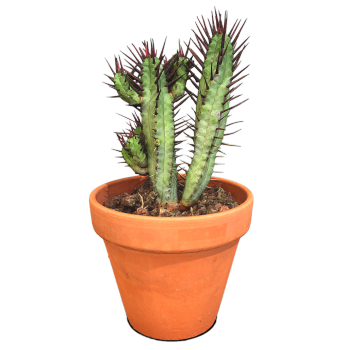
Red Colorful Kirin Potted Plant
824 View